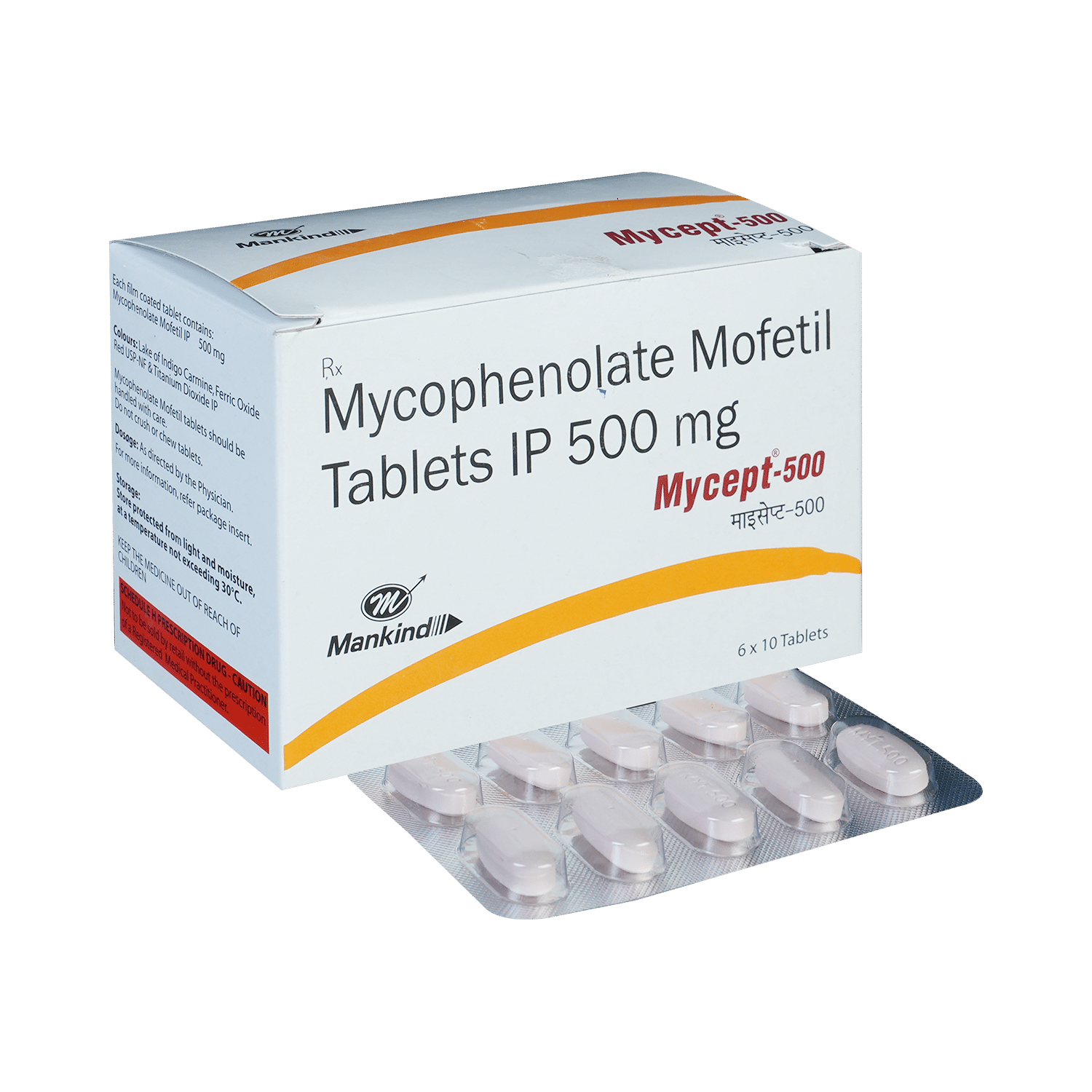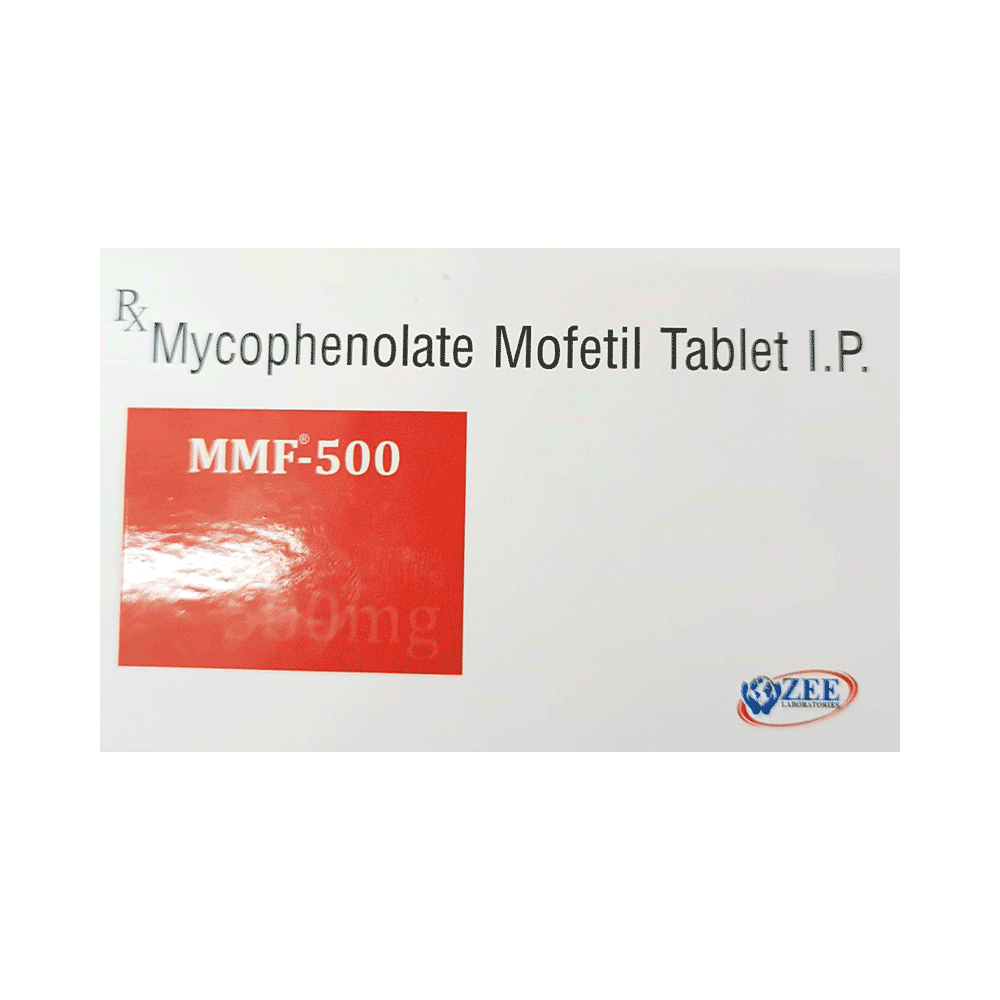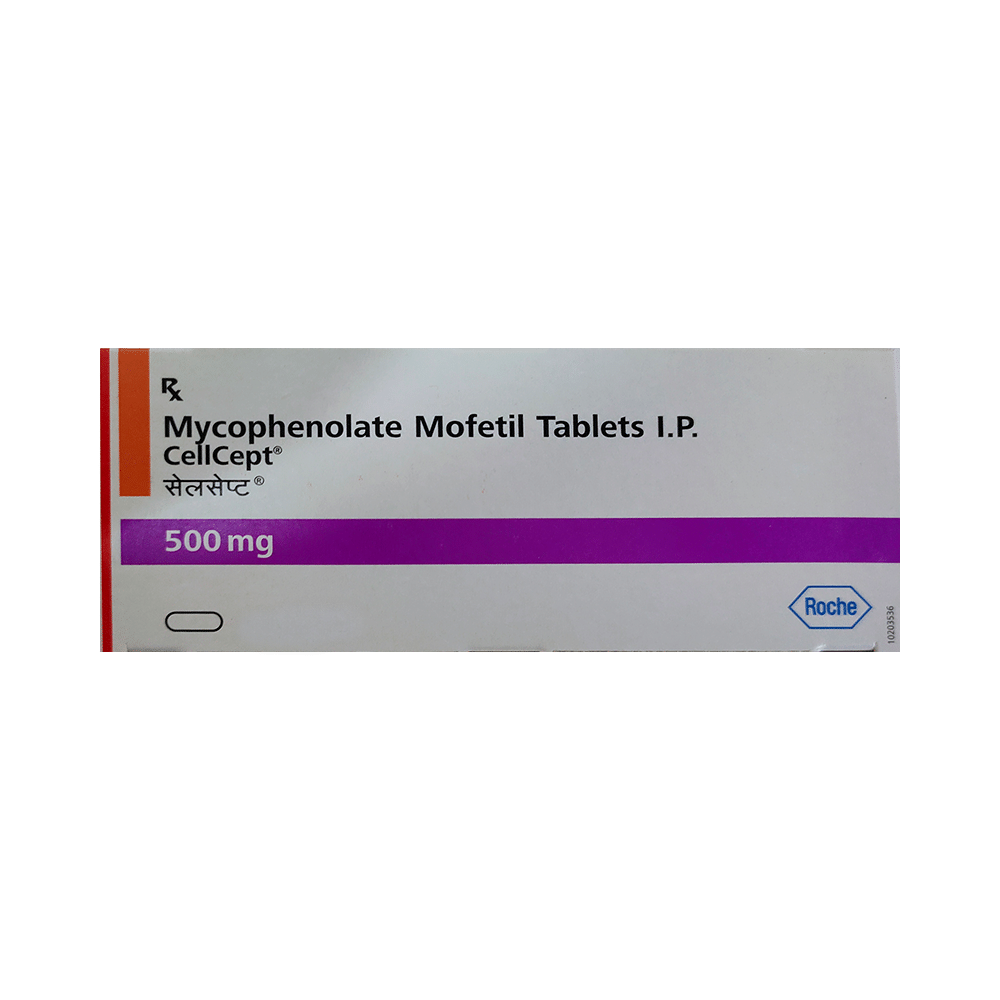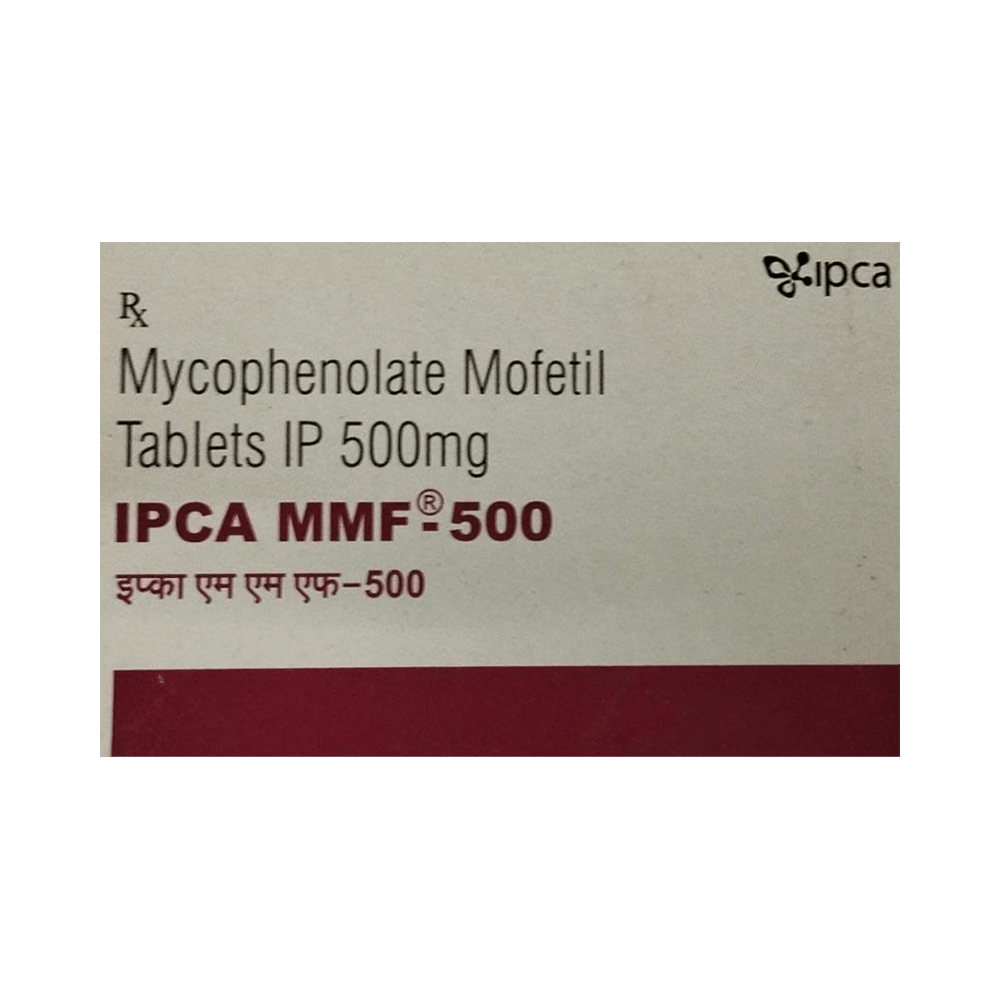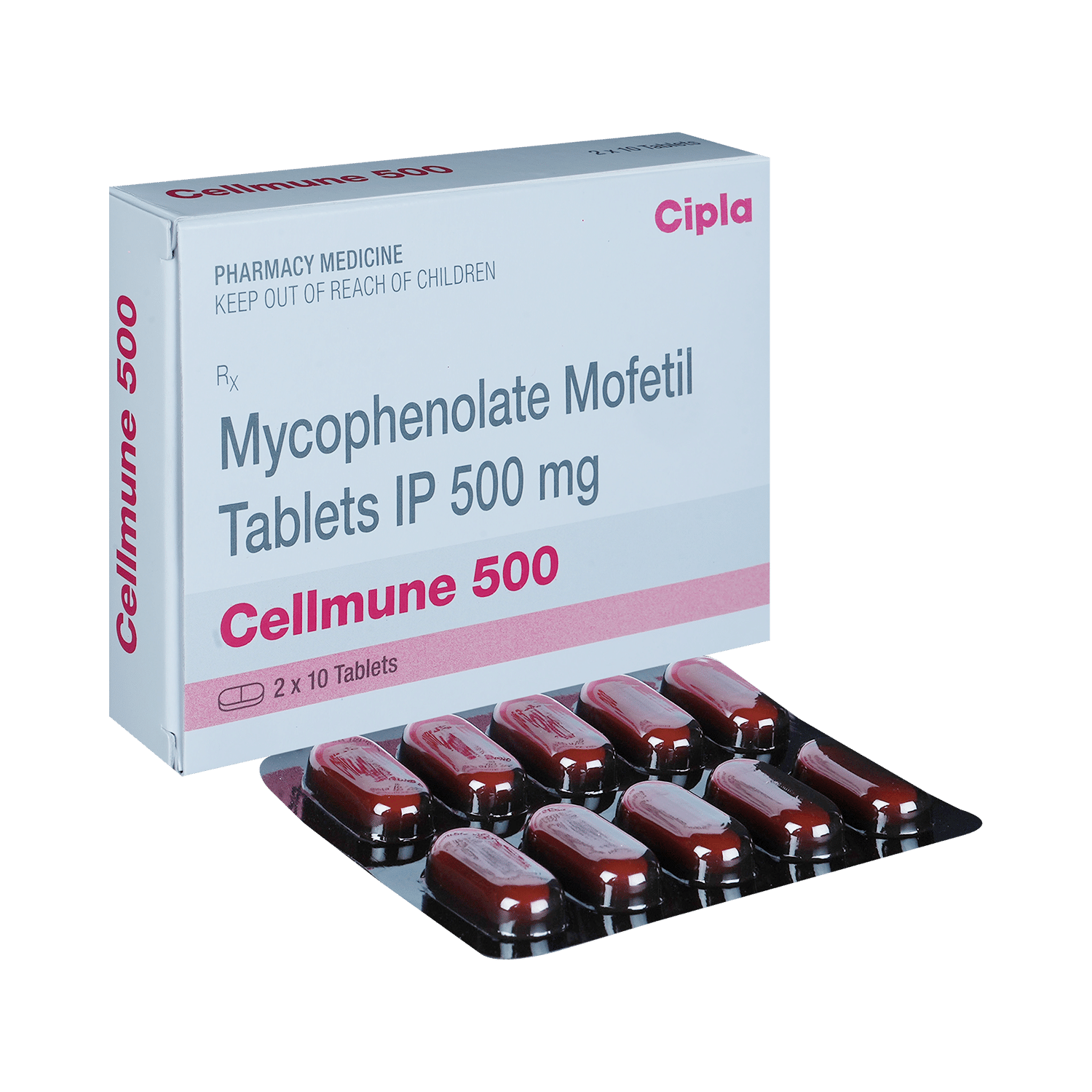
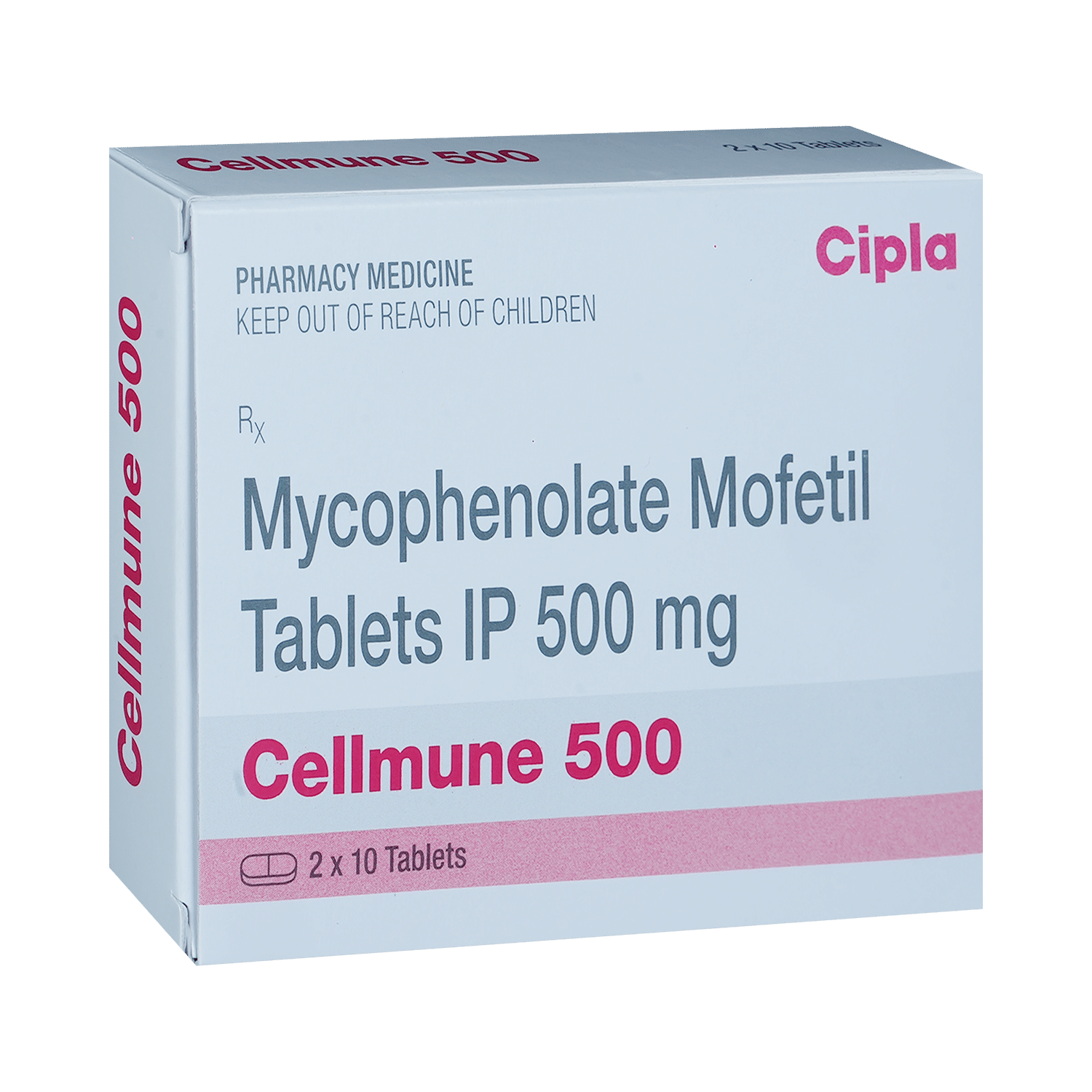
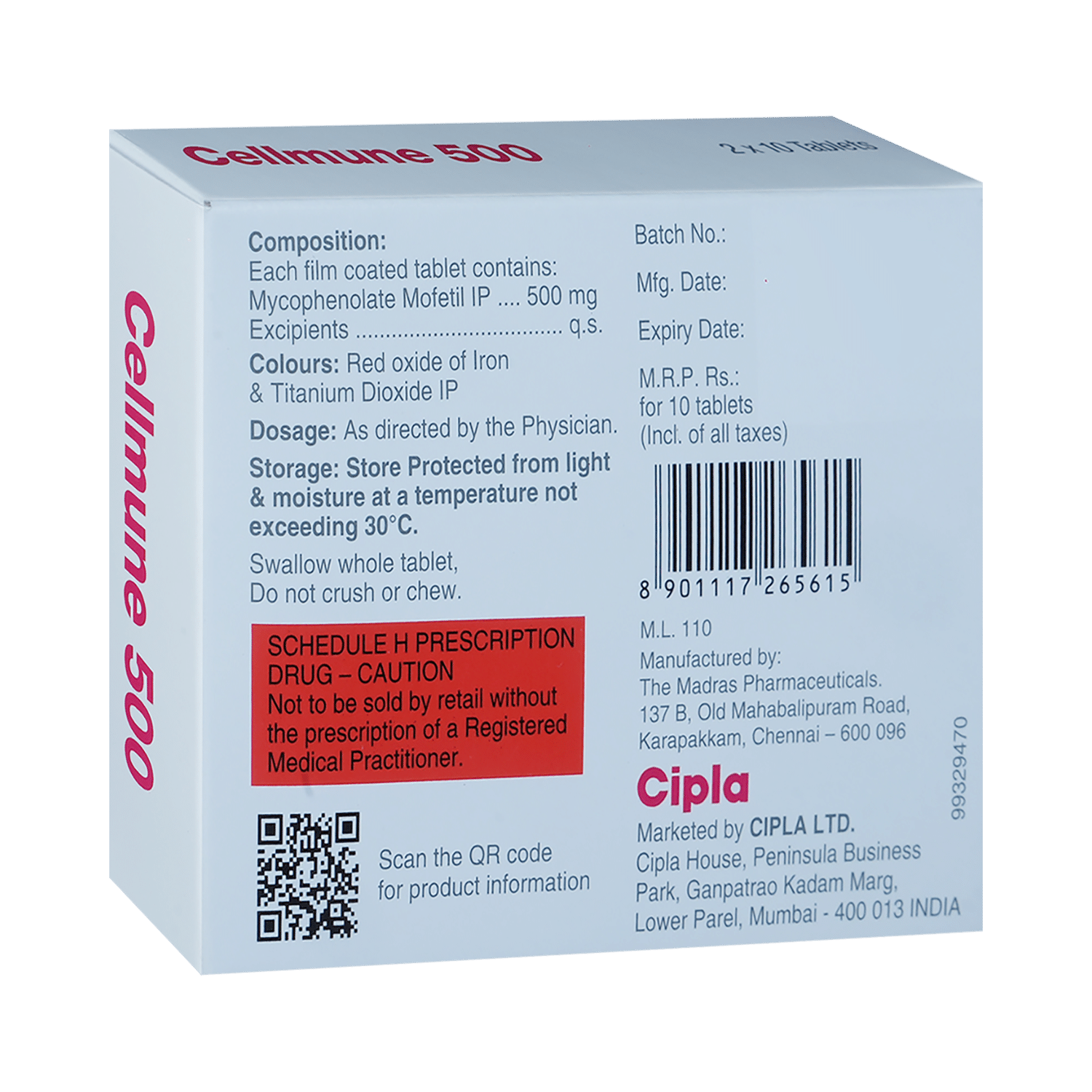
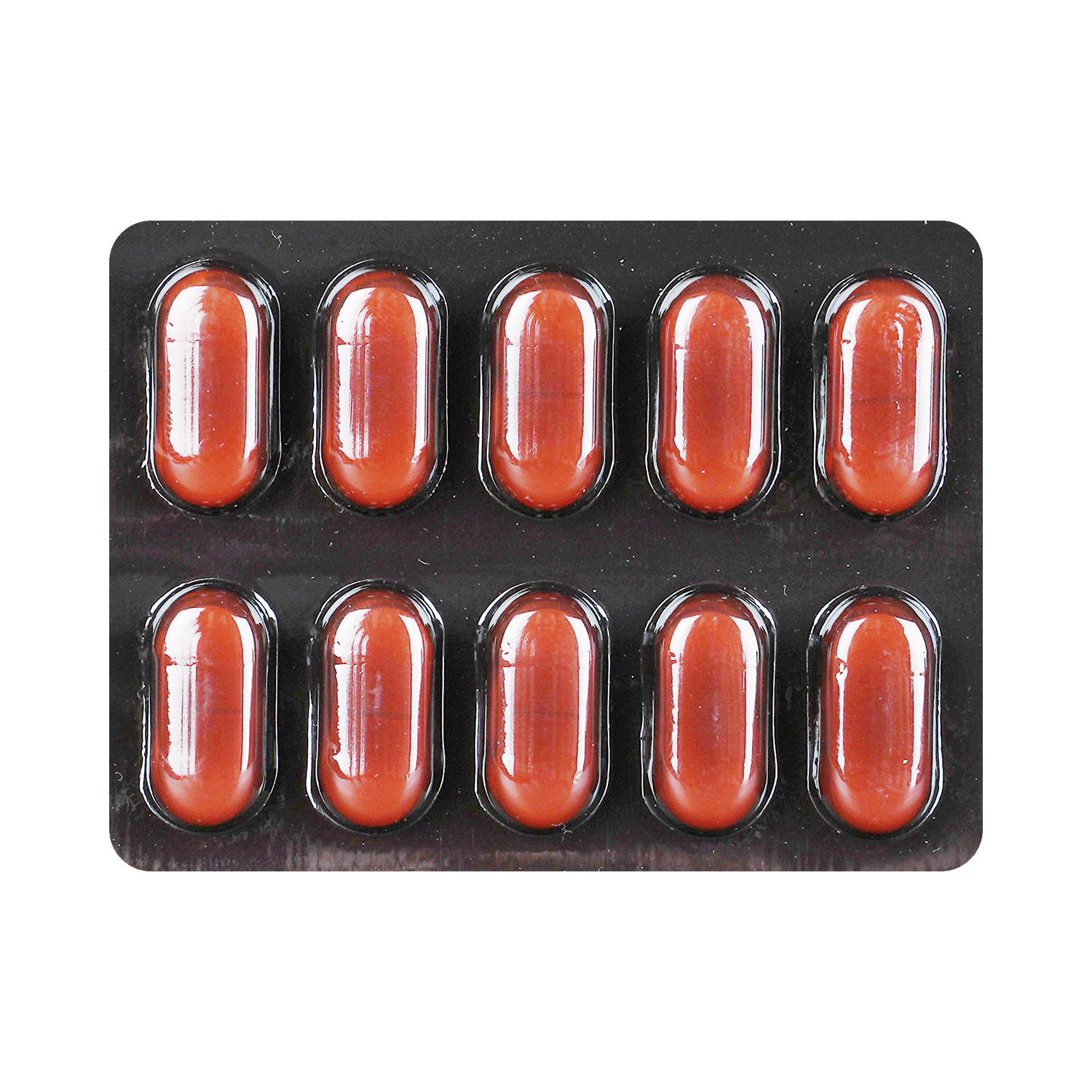
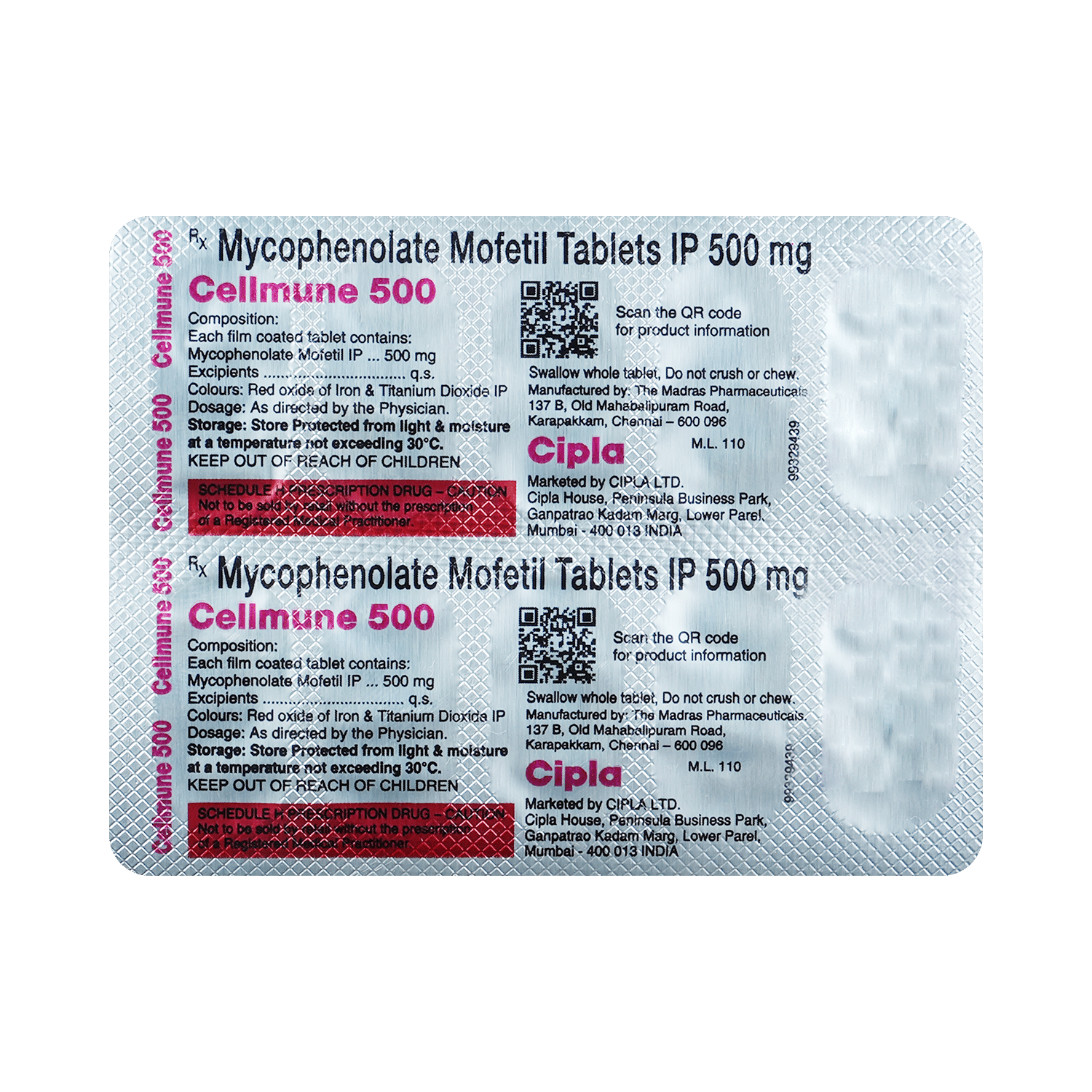
Cellmune 500mg Tablet
1 Strip of 10 Tablets.Prescription required
About this product:
| Salt Composition: | Mycophenolate mofetil (500mg) |
| Manufacturer: | Cipla Ltd |
| Storage: | Below 25 degree celcius |
Out of Stock
Have doubts about this medicine?
Have doubts about this medicine?
Cellmune 500mg Tablet is an immunosuppressant used to prevent organ rejection after a transplant, such as kidney, heart, or liver. Cellmune 500mg Tablet belongs to a group of medicines called immunosuppressants. It is used with other medicines to prevent your body from rejecting an organ (such as a kidney, heart, or liver) after a transplant. It works by suppressing your body's immune system so that it does not attack the new organ.
Cellmune 500mg Tablet is an immunosuppressant. It reduces the action of the body's own defense system (the immune system) and prevents rejection of the transplanted organ.
Can Cellmune 500mg Tablet cause cancer?
Cellmune 500mg Tablet may increase your chances of certain cancers, such as skin cancer and lymphoma (cancer of the lymph system). To reduce risk of sun-induced skin damage, avoid prolonged sunlight exposure when possible. Use protective clothing, sunscreen, and seek medical attention for any new skin lesions or changes in moles, such as sores that do not heal, sudden brown or black patches with uneven edges, or changes to your skin's appearance. Consult your doctor about any unexplained fever, fatigue, weight loss, or swelling in the neck, groin, or armpits.
Why has my doctor given me Cellmune 500mg Tablet after a kidney transplant?
Cellmune 500mg Tablet is an immunosuppressant. It helps your body accept the transplanted kidney by suppressing your immune system's activity, which fights against foreign substances and can reject transplants. Your doctor prescribed this to help your body integrate the donor kidney successfully.
Is Cellmune 500mg Tablet a steroid or chemotherapy medicine? Can it cause hair loss?
Cellmune 500mg Tablet is neither a steroid nor chemotherapy. It's an immunosuppressant, meaning it influences your immune system to weaken and reduce the chance of rejection of a transplanted organ. Hair loss is a common side effect of Cellmune 500mg Tablet.
Do I need any special tests while taking Cellmune 500mg Tablet?
Your doctor will request a blood test before you start treatment to assess potential effects on your blood count. Regular blood tests should be administered during and after treatment, as they help monitor the medication's effectiveness and identify any side effects.
My doctor has asked me to stay away from someone who has chickenpox or shingles. Why?
Cellmune 500mg Tablet is an immunosuppressant, meaning it weakens your immune system. If you come into contact with a person infected with chickenpox or shingles, your weakened immunity could make you more susceptible to infection. Your doctor has advised caution to prevent potential complications.
What precautions should a female follow while taking Cellmune 500mg Tablet?
Do not take Cellmune 500mg Tablet if you are pregnant or plan a pregnancy. There is a high risk of miscarriage during the first three months of pregnancy. Cellmune 500mg Tablet may also cause birth defects in newborns. Before starting treatment, use two effective methods of contraception (e.g., hormonal birth control and barrier methods) for at least four weeks before and after treatment.
What precautions should a male follow while taking Cellmune 500mg Tablet?
During treatment, it's advised that either the man or his partner use reliable contraception. Men should not donate semen for at least 90 days after discontinuation of Cellmune 500mg Tablet.
Take this medicine in the dose and duration as advised by your doctor. Swallow it as a whole. Do not chew, crush or break it. Cellmune 500mg Tablet is to be taken with food.
- Your doctor has prescribed Cellmune 500mg Tablet to stop your body from rejecting a transplanted organ (e.g. kidney, heart or liver).
- It may take 6 to 12 weeks for Cellmune 500mg Tablet to start working. Keep taking it as prescribed.
- It may cause birth defects so birth control is required in females with reproductive potential.
- It makes you more susceptible to getting infections. Avoid contact with people who have an infection.
- Protect yourself from direct sunlight by wearing protective clothing and applying a sunscreen with a high sun protection factor (SPF).
- Take it with food to minimize possible side effects like nausea and stomach pain.

Alcohol
Consuming alcohol with Cellmune 500mg Tablet does not cause any harmful side effects.

Breastfeed
Cellmune 500mg Tablet is unsafe to use during breastfeeding. Data suggests that the drug may cause toxicity to the baby.

Pregnancy
Cellmune 500mg Tablet is unsafe to use during pregnancy as there is definite evidence of risk to the developing baby. However, the doctor may rarely prescribe it in some life-threatening situations if the benefits are more than the potential risks. Please consult your doctor.