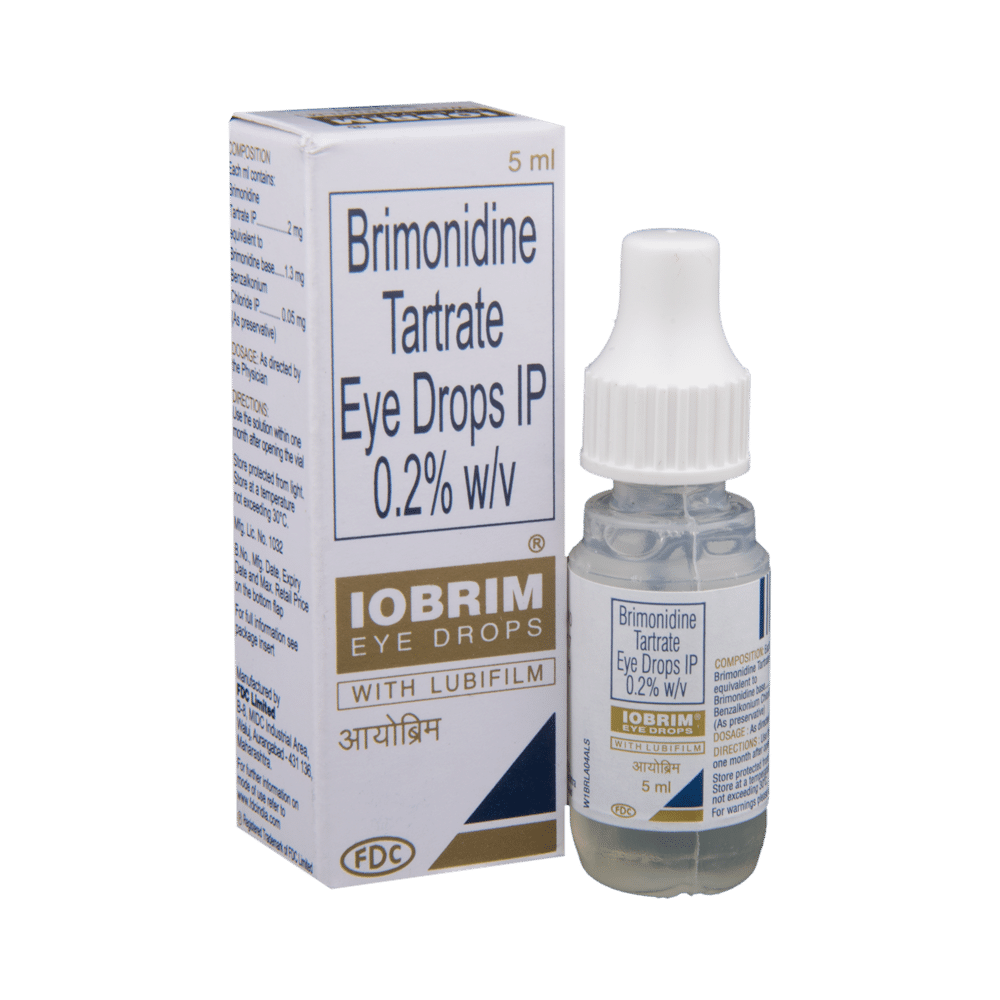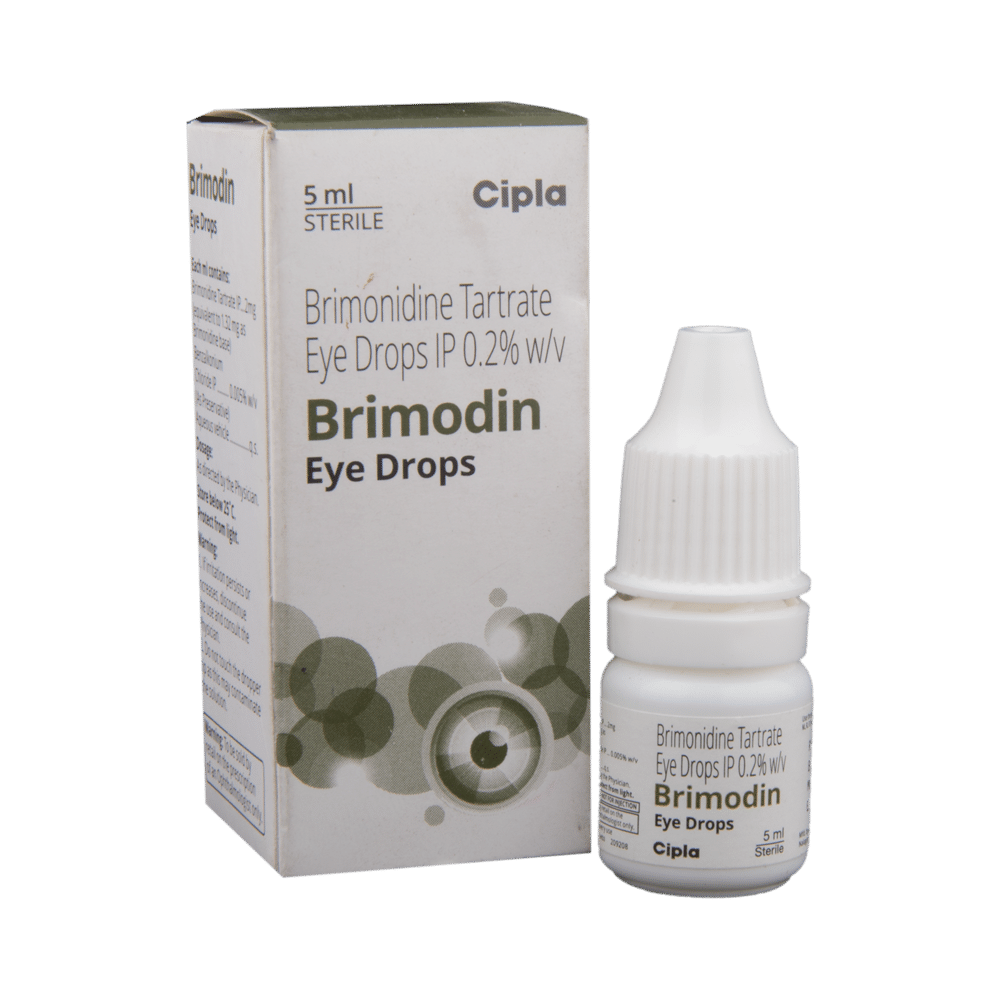
Brintod 0.2% Eye Drop
bottle of 5.0 ml Eye Drop.Prescription required
About this product:
| Salt Composition: | Brimonidine (0.2% w/v) |
| Manufacturer: | Entod Pharmaceuticals Ltd |
| Storage: | Below 25 degree celcius |
Out of Stock
Have doubts about this medicine?
Have doubts about this medicine?
Brintod 0.2% Eye Drop is used to treat ocular hypertension (pressure in the eye) and glaucoma, helping to lower high pressure in the eye and reduce the risk of vision loss. Brintod 0.2% Eye Drop is a sympathomimetic used for external use only. It works by decreasing the production of aqueous humour (fluid in the eye) thereby lowering the increased eye pressure. If you wear contact lenses, remove them before using the medication. Avoid touching the tip of the dropper to any surface as it may contaminate the eye drop. For best results, use it daily in the evening or at night. The common side effects include allergic conjunctivitis, burning sensation, conjunctival inflammation, conjunctival hyperemia, eye itching, high blood pressure, allergic reaction in the eyes, dry mouth, and visual disturbance. If they persist or worsen, inform your doctor.
Brintod 0.2% Eye Drop is a sympathomimetic. It works by decreasing the production of aqueous humour (fluid in the eye) thereby lowering the increased eye pressure.
This medicine is for external use only. Use it in the dose and duration as advised by your doctor. Check the label for directions before use. Hold the dropper close to the eye without touching it. Gently squeeze the dropper and place the medicine inside the lower eyelid. Wipe off the extra liquid.
- Put one drop 2-3 times daily in the affected eye(s)
- Apply pressure on the corner of the eye (close to the nose) for about 1 minute immediately after instilling the drop
- Remove contact lenses before using Brintod 0.2% Eye Drop and allow at least 15 minutes before re-inserting them
- Do not touch the tip of the dropper to any surface or to your eye to avoid contaminating the eye drops
- Wait for at least 5-10 minutes before delivering the next medication in the same eye to avoid dilution
- It may cause short term blurring of vision when first used. Use caution before driving or using machines.
- It may cause temporary burning or itching sensation in the eye. Inform your doctor if this does not go away.
- Make sure to use within 4 weeks of opening the bottle.
- Allergic conjunctivitis
- Burning sensation
- Conjunctival inflammation
- Conjunctival hyperemia
- Eye itching
- High blood pressure
- Allergic reaction in the eyes
- Dry mouth
- Visual disturbance

Breastfeed
Brintod 0.2% Eye Drop is probably safe to use during breastfeeding. Limited human data suggests that the drug does not represent any significant risk to the baby. To reduce the amount of Brintod 0.2% Eye Drop that reaches the breastmilk, place pressure over the corner of the eye for 1 minute or more, then remove the excess solution with an absorbent tissue.

Pregnancy
Brintod 0.2% Eye Drop is generally considered safe to use during pregnancy. Animal studies have shown low or no adverse effects to the developing baby; however, there are limited human studies.