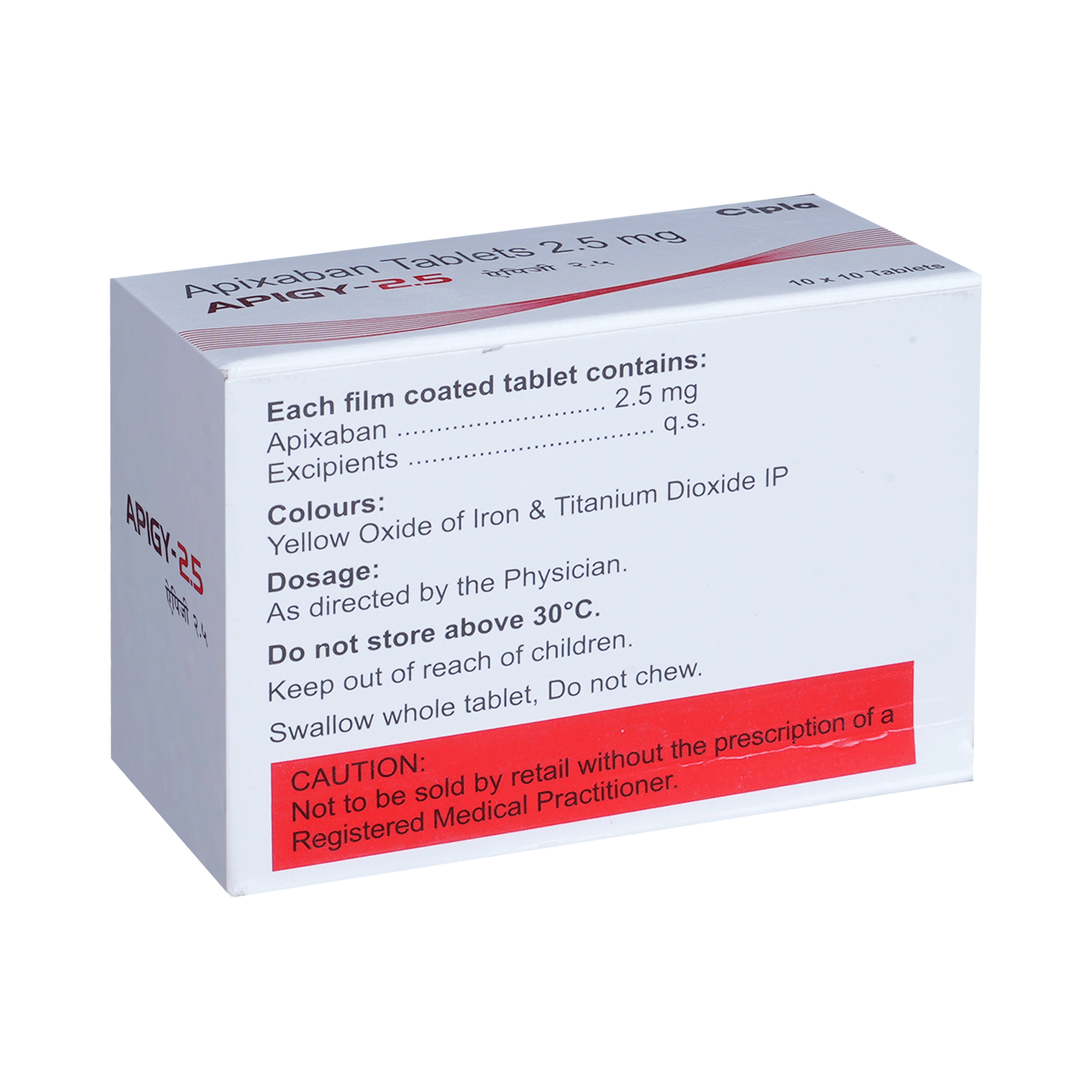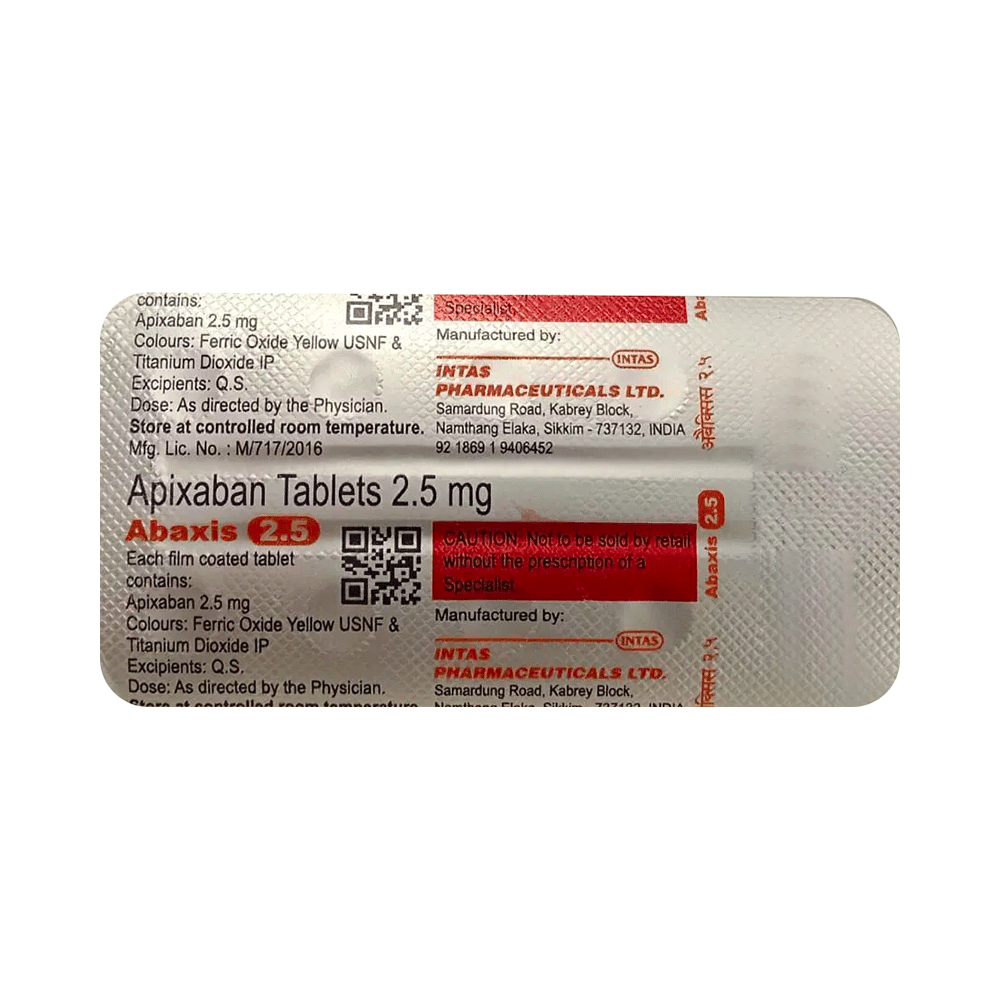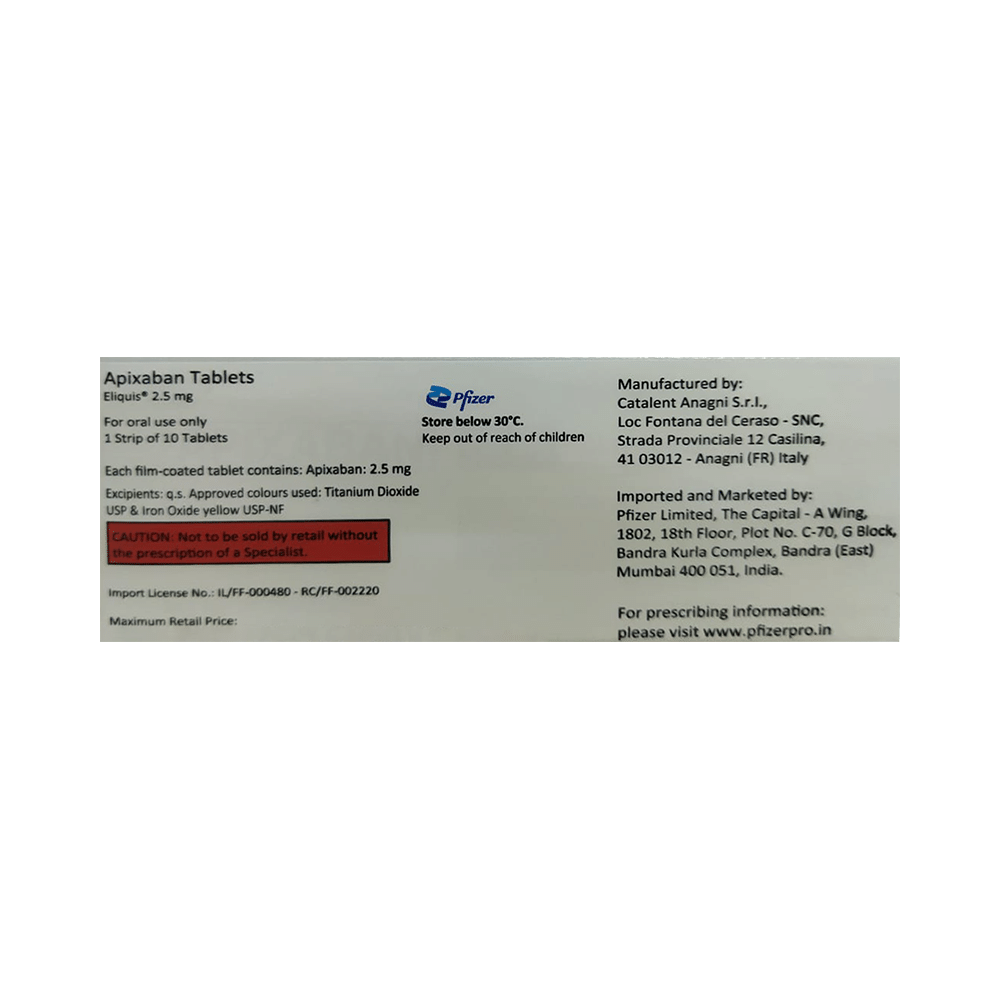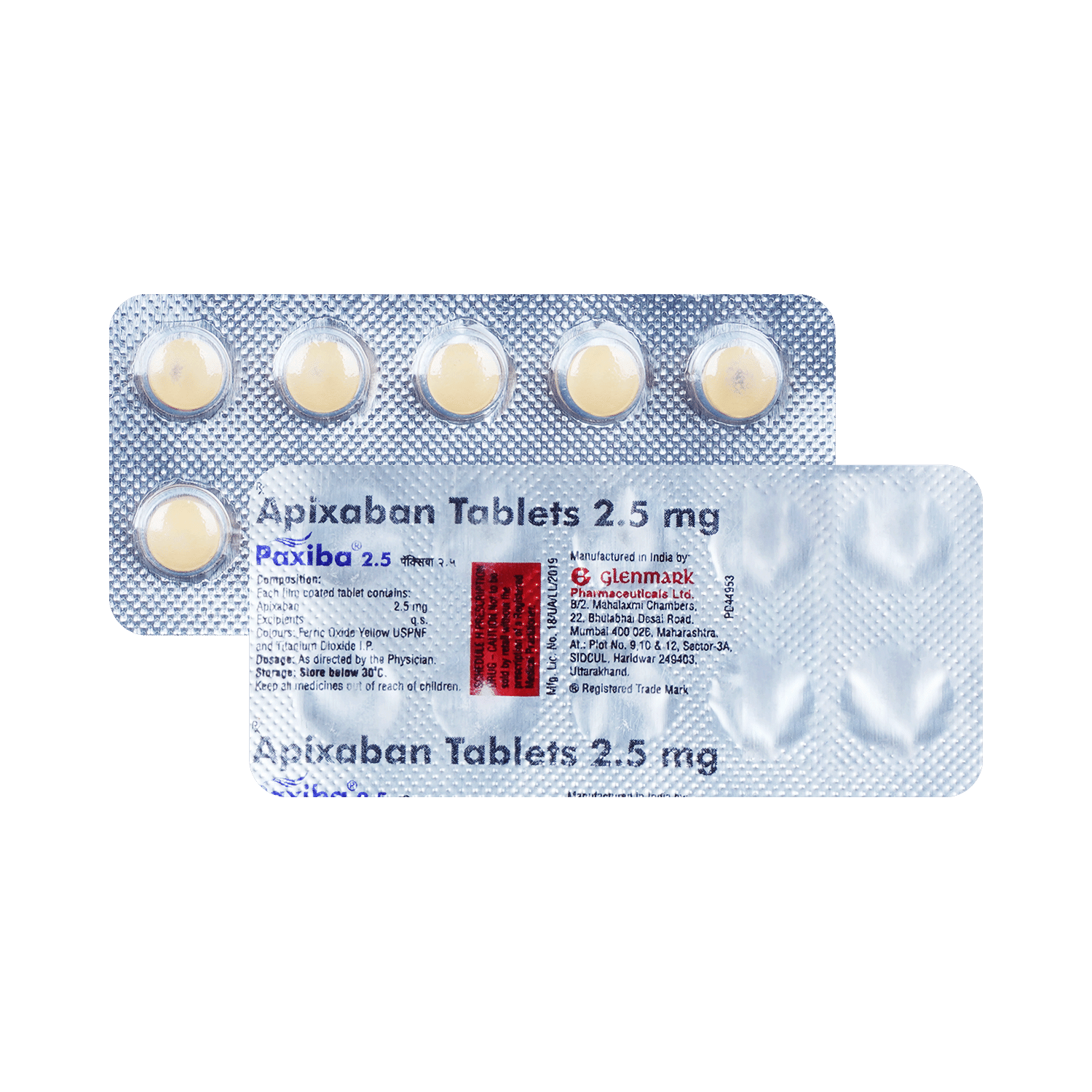
Apixaid 2.5 Tablet
strip of 10.0 tablets.Prescription required
About this product:
| Salt Composition: | Apixaban (2.5mg) |
| Manufacturer: | Workcell Solutions Private Limited |
| Storage: | Below 25 degree celcius |
Out of Stock
Have doubts about this medicine?
Have doubts about this medicine?
Apixaid 2.5 Tablet is a medicine known as an anticoagulant or blood thinner that helps prevent and treat blood clots. Apixaid 2.5 Tablet is a medicine known as an anticoagulant or blood thinner. It helps prevent and treat blood clots. It prevents and treats clot formation in the veins of your legs, lungs, brain, and heart. It is used to reduce the risk of stroke and heart attack.
Apixaid 2.5 Tablet is a novel oral anticoagulant (NOAC) that works by preventing the formation of blood clots in the body.
Can I cut the tablet of Apixaid 2.5 Tablet?
If you have difficulty swallowing the whole tablet, it may be crushed and mixed with water or 5% dextrose in water, or apple juice or apple puree. Always crush the medicine just before you take it.
What if I miss a dose of Apixaid 2.5 Tablet?
If a dose is missed, the patient should take Apixaid 2.5 Tablet immediately and then continue with twice daily intake as before.
What are the side effects of taking Apixaid 2.5 Tablet?
Apixaid 2.5 Tablet may cause bleeding in eyes, stomach, nose, etc., and anemia which may lead to tiredness or paleness. It may also lower your blood pressure which could result in fainting or a rapid heartbeat and nausea. Blood tests might show an increase in gamma glutamyltransferase (GGT), indicating possible liver problems.
What is Apixaid 2.5 Tablet used for?
Apixaid 2.5 Tablet is used to reduce the risk of stroke and blood clots in people who have atrial fibrillation. In atrial fibrillation, the heart beats irregularly, increasing the likelihood of clots forming and potentially leading to strokes. Apixaid 2.5 Tablet also helps to reduce the risk of forming a blood clot in the legs or lungs after hip or knee replacement surgery. It may also help prevent blood clots in the veins of your legs (deep vein thrombosis) or lungs (pulmonary embolism), and reduce the risk of them occurring again.
How dangerous is Apixaid 2.5 Tablet?
While using Apixaid 2.5 Tablet, be aware that it may cause excessive bleeding because it's a blood thinner. Do not stop taking the medication without consulting your doctor. If you had epidural or spinal anesthesia or a spinal puncture while on Apixaid 2.5 Tablet, you might develop a blood clot in or around your spine, which could result in paralysis in some patients. Always inform your doctor if you've had any of these procedures.
Do I need to stop Apixaid 2.5 Tablet before surgery?
Consult your doctor to determine whether you need to stop it before surgery, as it depends on the type of procedure. If there is a high risk of bleeding during the procedure, you might need to stop taking Apixaid 2.5 Tablet for at least 48 hours prior.
Is Apixaid 2.5 Tablet a blood thinner?
Yes, Apixaid 2.5 Tablet belongs to a class of medicines called anticoagulants or blood thinners. It prevents your blood from clotting by preventing the formation of an important component of blood clotting (factor Xa).
What are the symptoms of overdosage of Apixaid 2.5 Tablet?
Taking more than the recommended dose of Apixaid 2.5 Tablet may cause unusual bleeding or bruising, red, brown, or pink urine, red or black, tarry stools, and coughing up or vomiting blood or material that looks like coffee grounds. Seek immediate medical attention from your doctor or visit an emergency room.
Take this medicine in the dose and duration as advised by your doctor. Swallow it as a whole. Do not chew, crush or break it. Apixaid 2.5 Tablet may be taken with or without food, but it is better to take it at a fixed time.
- Apixaid 2.5 Tablet can be taken with or without food. Night time administration is not preferable.
- It interacts less with food or other medicines. Hence frequent dose changes are not required.
- It increases your risk of bleeding. Be careful while shaving, cutting fingernails or toenails, using sharp objects or engaging in contact sports.
- Inform your doctor if you see blood in your vomit, urine or stool.
- If you are going to have a surgery or dental treatment, you may be asked to stop taking Apixaid 2.5 Tablet temporarily.
- Notify your doctor if you have any kidney problem.
- Do not stop taking medication without talking to your doctor.

Alcohol
Caution is advised when consuming alcohol with Apixaid 2.5 Tablet. Please consult your doctor.

Breastfeed
Apixaid 2.5 Tablet is probably unsafe to use during breastfeeding. Limited human data suggests that the drug may pass into the breastmilk and harm the baby.

Pregnancy
Apixaid 2.5 Tablet may be unsafe to use during pregnancy. Although there are limited studies in humans, animal studies have shown harmful effects on the developing baby. Your doctor will weigh the benefits and any potential risks before prescribing it to you. Please consult your doctor.